 Happening today
 For travellers
 Business Pärnu
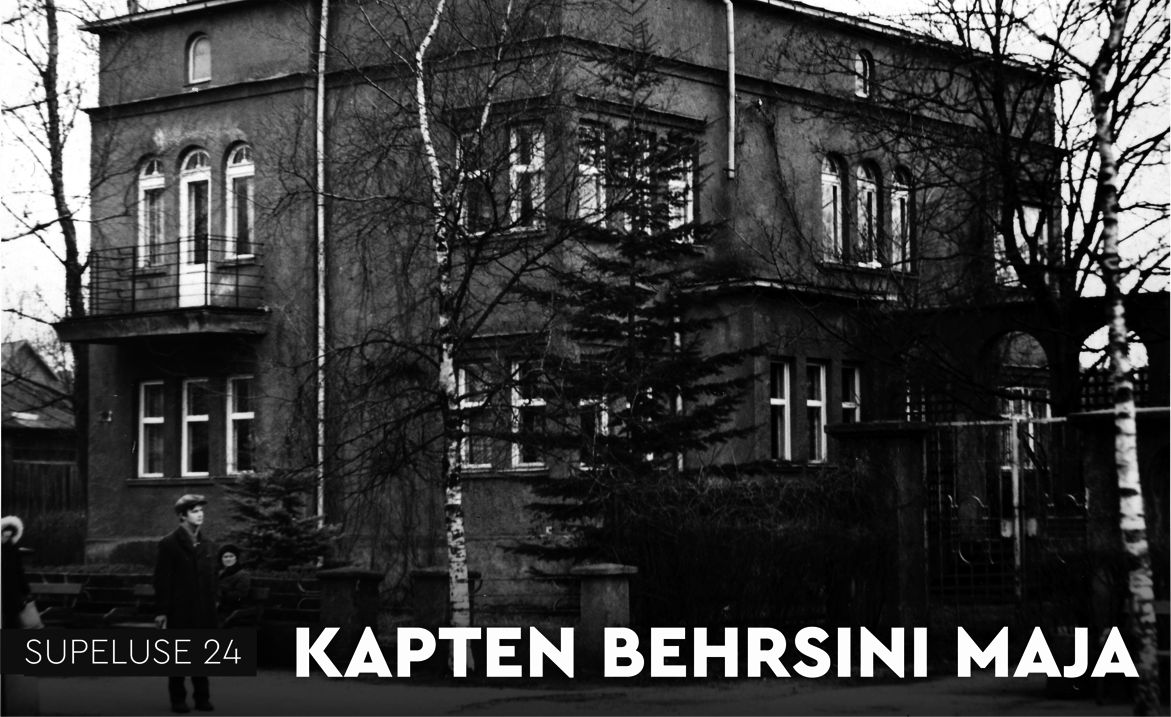
The story of this house began in 1932, when industrialist Hans Permann bought an empty plot of land and built a two-storey house on it.
Hans Permann (1879-1962) was born in Vändra. Before World War I, he worked in Riga, the provincial capital, and established a stove pot factory there in 1906. He was an active amateur actor. In his youth, he was a member of the “Salme” society in Tori and later in the drama club of the Riga Estonian Society. Karl Menning is said to have invited him to Vanemuine as a professional actor, but Permann had turned the offer down because of his successful company. During the period of the Republic of Estonia, his stove factory was located at the beginning of Liiva Street, under Konse, in Pärnu.
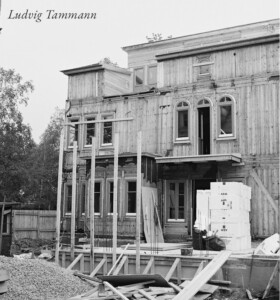
In 1932, Permann bought the property, and like his neighbour Wesset, commissioned the design of the house from Pärnu architects Erich von Wolffeldt and Aleksander Nürnberg. The building was completed by the summer of 1934. Permann himself stayed near his ceramics factory on Liiva Street and rented out both apartments. The newly widowed pastor’s wife Emilie Hasselblatt (1861-1945) moved into the first floor with her daughter Ellen (b. 1901), a kindergarten teacher. The director of the Pärnu Farmers’ Cooperative Bank Andrei Klein (Est. Andres Kalda, 1892-1987) moved into the second floor with his family, servant and nanny. In 1938, Hans Permann, or Ants Pärnoja in Estonian, decided to sell his property on Supeluse Street. It was bought by Fritz Behrsin, a long-distance captain of Latvian origin born in Kabli.
Fritz Behrsin, long-distance captain
Fritz Theodor Behrsin (1891-1972) was the son of Fritz Behrsin, a shopkeeper from Heinaste, who, as a young man, sailed the seas on the sailing ships of Häädemeeste shipowners. He then obtained the qualifications of a coastal captain at the Riga Maritime School and a long-distance captain at the Tallinn Maritime School. In 1918, he married Emilie Linin (1895-1982), the daughter of a Latvian ship mechanic, in Arhangelsk. Later, Behrsin became captain on the ships of the Estonian merchant fleet, including Estonia’s largest merchant ship, “Koidula“.
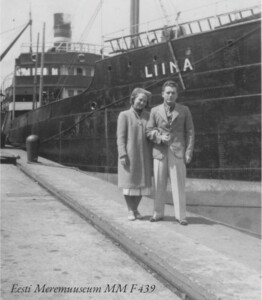 In 1932, while Fritz Behrsin was serving as captain of the passenger ship “Kungla“, the family was struck by a tragic event − a 15-year-old schoolboy shot their 13-year-old daughter Maiga (1920-1832) and then himself in the street in a jealous rage. After the death of their only child, the captain’s family decided to adopt their daughter’s schoolmate and her best friend, Heleena Kullman (1920-?). She had grown up in the large family of Andrei Kullman (1888-1931), a shoemaker from Luunja parish, with eight children, and had recently lost her father. Due to the girl’s mother’s objections, it was not formalised, but later on, the Behrsin family supported her in her studies, offered her the opportunity to stay at their home in Pärnu in the summers, and, if she wished, accompany her stepfather on trips abroad on his ships.
At the time of the coup in June 1940, Heleene, who in the same year had Estonianised her first name as ‘Leen’, was on holiday in Pärnu, staying at the Behrsin’s house on Supeluse Street. Upon returning to Tallinn, she decided to join the communists, probably influenced and shaped by her poor background and the attitudes of her siblings.
After the beginning of the war, Leen enrolled in a paratrooper course and, as the front approached, evacuated to the Soviet rear, where, as a German speaker, she ended up studying at an intelligence school in Kronstadt. In September 1942, she was sent as a spy to German-occupied Estonia. For three months, she managed to hide herself, moving mainly around Tartu. After arriving in Pärnu in December, she transmitted intelligence to the Soviet rear about German ships in Pärnu Harbour and ice conditions in the bay.
Leen Kullmann was arrested on 2 January 1943 in Luutsniku, Rõuge Parish, at her sister Olga’s home farm. Regarding what happened next, official Soviet propaganda and the current generally accepted understanding of her future fate diverge. According to the Soviets, Kullmann did not betray her Soviet homeland and was shot on 6 March 1943. In 2000, the newspaper “Postimees” published another version of the story, according to which Leen Kullmann cooperated with the Germans to save herself and her loved ones. She was given a new identity and escaped to the West with the retreating German troops in 1944.
While neither version has been definitively confirmed, what is certain is that Soviet propaganda made Leen Kullman a martyr, who was posthumously or “posthumously” awarded the honorary title of Hero of the Soviet Union in 1965. Streets and pioneer camps across the Soviet Union were named after her.
Nationalisation
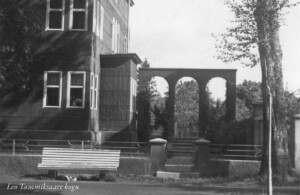
In the first year of communism, the house on Supeluse Street was expropriated from Behrsin. And although during the subsequent German occupation he sought justice and private property, and the return of his property seized by the Soviet authorities, he decided to leave for Sweden during the Great Escape of 1944.
The house on Supeluse Street, like the neighbouring Wessets’ house, was used by the sanatorium No. 2-4 (later the sanatorium “Rahu”), and holidaymakers from all over the Soviet Union stayed in the ten rooms of the house.
The house was returned to its legal successive owners in 1994, soon to be resold and reconstructed first as a dwelling with five apartments in 1999 and then as a boarding house.