 Happening today
 For travellers
 Business Pärnu
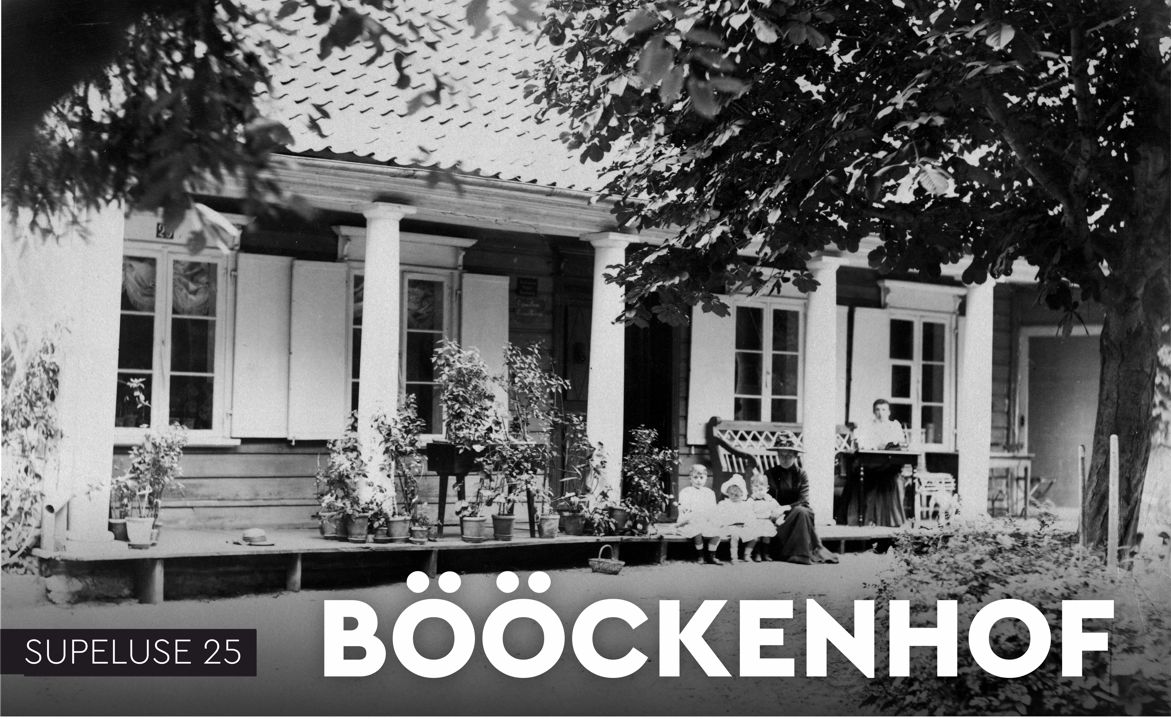
In the first half of the 19th century, the infertile, overly wet and often flooded land south of the fortress was used only as pasture and meadowland. It is known that the first summer manor in Pärnu was built on the present Supeluse Street in 1857.
It was later known as the Bööckenhof summer manor after Friedrich Oscar Woldemar von Bööcke, a merchant and cork manufacturer who bought the buildings in 1876.
Summer manor on the beach
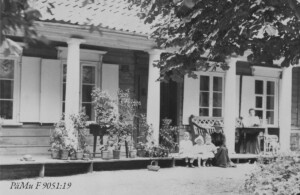
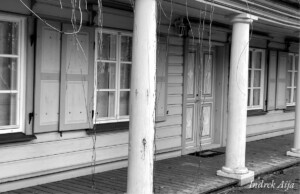
This is the oldest surviving late-classicist style wooden building with a semi-hipped roof in the Pärnu resort area, the front façade of which is distinguished by a Tuscan-style colonnade, six-pane windows with shutters, and dormers.
Initially, Bööckenhof remained a solitary complex of buildings, exposed to the sea breezes and surrounded by pastures. The situation began to change in the 1890s, when, with the development of the resort, interest in seaside areas began to grow. In the wake of the increased construction, part of the summer manor land, which until then had stretched as far as Mere Boulevard, was also subdivided. Thus, a whole new ensemble of summer villas (on today’s Suvituse Street) and including Bööcke Street (today’s Eha Street) was created in the Bööckenhof neighbourhood. After the death of Oscar von Bööcke, the Bööckenhof was first owned by his widow Anna Amalie, and from 1926 by his son Raymond Bööcke (1871-1940), the former solo cellist of the Imperial Court Orchestra, who had returned from Russia.
Internationally renowned cellist
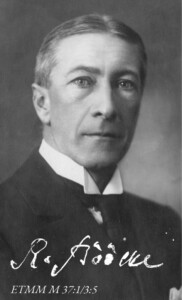 Raymond Friedrich August von Bööcke (1871-1940), born in Pärnu, began studying at the St Petersburg Conservatoire in 1888 after graduating from the local Boys’ Gymnasium. After graduating in 1894, he became a lecturer, first at the Kazan Music School and then at the Riga Music School of the Russian Imperial Musical Society. In 1917, he left revolutionary St Petersburg and returned to his homeland. In 1919, he was invited to teach the cello class at the Tallinn Higher Music School and then, from 1923, at the Tallinn Conservatoire, thus laying the foundations for professional cello teaching and concerts in Estonia.
Dendrologist Karl Aun
While the owner of the house lived in Tallinn, the summer manor house was rented out as a residence. Karl Eduard Aun (1861-1945), an internationally renowned dendrologist and one of the founders of Estonian academic forestry, was a long-term resident here. Born in Võru County as the son of a cattle manor tenant, Aun was probably the first Estonian to obtain a higher education in forestry at the Petrovsky Academy of Agriculture and Forestry in 1885. He then worked as a forester in Viru County, Riga and Kilingi Forest District. In 1926, he left the service and settled in the city of Pärnu, where he continued to work in his field, carrying out several dendrological studies. With a special interest in willow species, he identified a total of 14 species of willow (plus several hybrids) in a coastal park near his home.
Nationalisation
In 1935, Raymond Bööcke returned to his hometown, having left his post as professor at the conservatoire due to his failing health. On 9 September 1940, the artistic soul with aristocratic manners decided to commit suicide. A former student who had visited him previously recalled that Bööcke was emotionally very distraught, seeing Red Army soldiers and their military equipment bustling around on Supeluse Street and in the coastal park across the street from his home – the very thing he had fled from revolutionary Petrograd a couple of decades earlier.
The Soviet occupation authorities nationalised Bööckenhof. From 13 March 1941, the building in the heart of the resort area was taken over by the Pärnu Resort, and the construction section of the economic department serving the sanatoriums was located here.
The same function was retained in the building complex during the following German occupation and the next Soviet period – the office and workshops of the Resort Administration were located here. The main body of the building housed the offices of the construction section manager and foremen, while at the back of the house, in a wing building that has now been demolished, were the workshops of tinsmiths and locksmiths. In 1955, the buildings, which by then were in need of major renovation, were transferred to sanatorium No. 4 and, after its liquidation, to sanatorium No. 2 (later “Rahu”).
In later years, the house only had small rooms with communal kitchens and toilets for the resort staff to live in, now privatised as apartments.